
What does it really feel like to live by Tempe Town Lake? If you are drawn to the idea of trails outside your door, easy access to downtown Tempe, and an active waterfront setting, this part of the city offers a lifestyle that is hard to replicate elsewhere in the Valley. From housing styles to daily routines, here is what you can expect when you live near the lake. Let’s dive in.
Tempe Town Lake is not a traditional lakeside neighborhood tucked away from the city. It is a man-made lake created in 1999 along part of the Salt River, and it runs for a little more than two miles through the center of Tempe. Because it sits next to the Mill Avenue District, Arizona State University, and Papago Park, the area feels like an urban waterfront with a strong city energy.
That setting shapes everyday life in a big way. You are not just near water. You are near jobs, events, transit, restaurants, and public spaces that are used by people from across Tempe and the broader Phoenix area.
The city reports that more than 2.4 million people spend time at Town Lake each year. It also says the lake hosts more than 40 special events annually and has generated more than $5 billion in cumulative economic impact since it was created. In other words, this is one of Tempe’s most active and important destinations.
Living near Tempe Town Lake often means your routine starts outdoors. The city says there are 12-foot concrete paths on both sides of the lake, with more than five miles of paths overall. The paths are open daily from 5 a.m. to midnight, which gives you a wide window for walks, runs, bike rides, or evening strolls.
You will also notice how connected the shoreline feels. The north and south sides link through the Mill Avenue bridges and the Rural Road Bridge, so getting around on foot or by bike is practical for many day-to-day outings. That can make the area feel more flexible and less car-dependent than many other parts of metro Phoenix.
The path system attracts a wide mix of users. Joggers, cyclists, dog walkers, parents with strollers, skaters, and skateboarders all use the same waterfront network. That steady movement adds energy to the area and helps the lake feel like part of daily life, not just a weekend destination.
Tempe Town Lake supports a broad mix of activities. According to the city, the lake is used for boating, rowing, dragon boats, outrigger canoe clubs, paddleboard and kayak rentals, fishing, public art, and community races and triathlons. More than 2,000 rowers use the lake each year.
If you like the idea of a home base that supports an active lifestyle, that matters. You can build a routine around the trail, enjoy time on the water, or simply take advantage of the parks and public spaces around the shoreline. Fishing is also allowed with a standard Arizona license.
One of the defining features of the lake area is its event calendar. Tempe Beach Park hosts about 40 events each year, including Ironman Arizona, the Rock n Roll Marathon, Fourth of July celebrations, and Way Out West Oktoberfest. The city also lists annual events such as Innings Festival and the Fantasy of Lights Boat Parade.
For many residents, that creates a fun sense of momentum. There is often something happening nearby, and the waterfront feels like a shared civic space. At the same time, it is smart to expect some periodic crowds, added traffic, and busier weekends during major events.
Mobility is one of the biggest lifestyle advantages in this part of Tempe. The city says light rail runs seven days a week with nine stops in Tempe, and the Tempe Streetcar spans 3.1 miles with 14 stops and daily service. The lakefront also connects to bus service, Orbit circulators, and bike-friendly streets.
For you, that can translate into easier commuting and simpler local trips. Depending on exactly where you live and work, you may be able to rely less on your car for dining, campus access, errands, or outings in and around downtown Tempe. That is a meaningful difference in a region where many neighborhoods are built around driving.
Parking is still part of the equation, especially during peak times. Tempe notes that on-street parking can be limited in high-traffic areas, even though there are more than 20,000 public parking spaces within a two-mile radius of downtown. If you are considering a home near the lake, it helps to think through your parking habits and guest parking needs early.
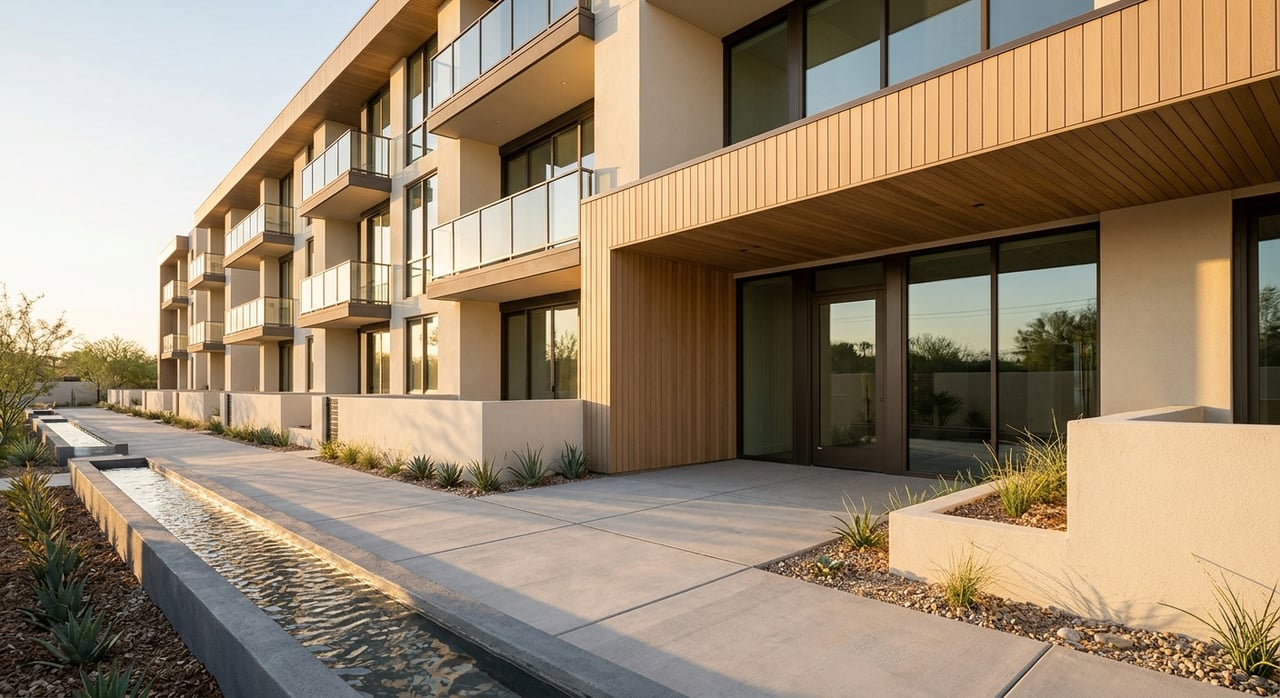
If you picture a waterfront lined mostly with detached houses, Tempe Town Lake may surprise you. The immediate lake edge is primarily high-density and mixed-use. That means condos, apartments, commercial towers, office campuses, hotels, and newer large-scale developments shape much of the visual character right along the shoreline.
City materials describe projects such as Hayden Ferry Lakeside, which includes commercial towers, a hotel, and condominiums. They also describe Watermark as a 15-acre mixed-use development with Class A office space, luxury apartments, retail, and dining. Marina Heights adds another large office-and-retail campus with a public lakeside park, while South Pier is planned as a southeast-lakeshore project with a high-rise residential first phase.
If you want to live closest to the water, the housing style is usually more urban and vertical. That often appeals to buyers who value lock-and-leave convenience, walkability, and immediate access to trails, dining, and entertainment. It can also be a strong fit if you prefer a more modern, mixed-use setting over a traditional suburban layout.
Tempe’s planning documents reinforce this pattern. The city describes the broader Downtown Tempe, Rio Salado, ASU, and northwest neighborhoods area as a walkable mixed-use environment with higher-density development. General Plan 2050 materials also point toward additional mixed-use density along parts of the south lake edge and east of Rural Road.
That does not mean your options stop at condos or apartments. Tempe’s housing framework includes single-family homes, duplexes, townhomes, and multifamily housing. In practical terms, the immediate waterfront tends to be the most urban, while surrounding neighborhood areas may offer lower-rise homes and a different pace.
This distinction matters when you begin your home search. If your priority is being steps from the trail, you will likely focus on high-density lake-adjacent properties. If you want a little more separation from event activity while staying close to the waterfront, looking slightly farther out can open up more variety.
Tempe Town Lake is not only a recreation area. It is also one of the city’s major employment corridors. The city reports more than 42,000 jobs and 30,000 residents within a mile of the lake, along with more than 13.8 million square feet of built development and another 2.7 million under construction.
That combination helps explain why the area feels so active throughout the day. Morning workouts blend into office traffic, lunch breaks, campus movement, and evening social outings. If you like neighborhoods where daily life feels layered and connected, the lakefront delivers that experience.
The retail and dining mix also supports that rhythm. City planning materials describe downtown as an evolving blend of residential, retail, office, and entertainment uses, and Watermark specifically includes retail and dining. For residents, that often means coffee runs, casual dinners, and meetups can happen close to home.
Living near Tempe Town Lake is often a strong match if you value walkability, transit access, outdoor activity, and an urban-waterfront atmosphere. The area tends to suit people who enjoy being in the middle of things rather than removed from them. If you want a lively setting with movement and options, this part of Tempe stands out.
It can be especially appealing if you work nearby, spend time at ASU, or want quick access to downtown Tempe. The path network also links to destinations such as Tempe Marketplace, Papago Park, the Indian Bend Wash Greenbelt, and downtown Phoenix. That connectivity adds to the sense that the lake is part of a bigger daily lifestyle map.
Every neighborhood style comes with tradeoffs, and Tempe Town Lake is no exception. The same features that make it exciting also create more activity. Major events, steady foot traffic, and a dense built environment can mean more noise, more traffic planning, and a greater need to think ahead about parking.
You may also find that the immediate lakefront is not the best fit if you want a large yard or a more traditional suburban rhythm. Buyers who prefer quieter streets and lower-density surroundings often choose to live a bit farther from the waterfront while still enjoying access to it. The key is matching the location to the way you actually want to live every day.
Before choosing a home near Tempe Town Lake, it helps to get clear on your priorities. Ask yourself how much you value trail access, transit, and walkability compared with extra space or a quieter setting. The answer will often point you toward either the immediate lakefront or nearby neighborhoods with a little more separation.
You should also think about how often you plan to use the amenities around the lake. If you will regularly run the paths, use transit, meet friends downtown, or enjoy waterfront events, living close by may deliver real day-to-day value. If those features sound nice but not essential, broadening your search area may create more housing flexibility.
A thoughtful home search here is about fit, not just proximity. The best choice is the one that supports your routine, your budget, and the kind of lifestyle you want to build over time.
If you are exploring Tempe and want guidance that feels personal, strategic, and grounded in how you actually live, Timeless can help you evaluate neighborhoods, compare housing options, and move forward with confidence.

Real estate is more than a purchase— it’s a foundation for your future. Buy, sell, and invest with purpose, building generational wealth that endures. The choices you make today shape a legacy that stands the test of time.
7633 E ACOMA DR UNIT 208B SCOTTSDALE AZ 85260