
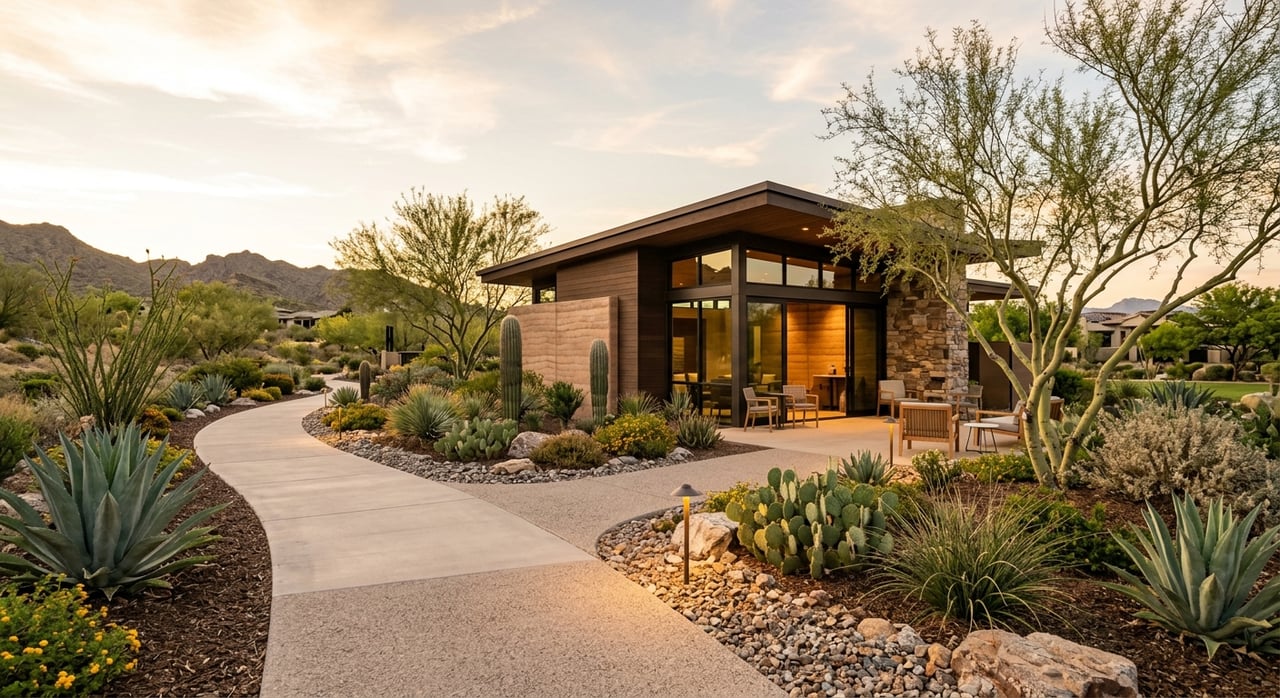
If you are considering a master-planned community in Chandler, it is easy to get pulled in by beautiful entry monuments, lakes, walking paths, and polished common areas. But in a city that is nearing build-out, the smarter question is not just what looks good today, but what will continue to work well for you over time. When you know how to evaluate HOA structure, amenities, upkeep, and everyday convenience, you can make a more confident decision. Let’s dive in.
Chandler is a large, established East Valley city with 293,230 residents and 115,161 housing units. The city reports that it is approaching 94% build-out, which means many buyers are not choosing between endless waves of brand-new neighborhoods. Instead, you are often comparing established communities based on maintenance, lifestyle fit, and long-term value.
That matters because Chandler offers a strong mix of local employment, recreation, and neighborhood variety. The city’s employer base includes major operations from Intel, Wells Fargo, Bank of America, and Dignity Health, along with more than 50 Fortune 1000 companies with Chandler offices. In practical terms, many buyers are weighing how a community connects to work, daily routines, and the broader Chandler lifestyle.
In Arizona, a planned community is an association-based development with mandatory membership and assessments. That means your experience as an owner is shaped not just by the home itself, but also by the rules, finances, and maintenance standards of the HOA.
Before you fall in love with a neighborhood name, verify the HOA status by the exact address. Chandler’s InfoMap distinguishes HOA-governed neighborhoods from traditional neighborhoods, and the city lists more than 300 registered neighborhoods. That is an important reminder that governance can vary, even within well-known areas.
For a Chandler resale purchase, key HOA documents can tell you a lot about the health of the community. Arizona resale disclosures require items such as the budget, annual financial report, reserve study if any, and a summary of pending litigation.
You should also review the declaration, bylaws, and current rules. These documents help you understand what the HOA fee supports, how decisions are made, and whether there are any financial or maintenance concerns that could affect your ownership experience.
Arizona law generally requires board and committee meetings to be open to members, with advance notice and agenda requirements, except for limited closed-session situations. That can give you helpful insight into how transparent and organized a community is.
A well-run HOA does not guarantee the perfect fit, but it often signals stronger communication and more predictable operations. If you are buying into a planned community, that kind of structure matters.
Amenities are often the headline feature in a Chandler master-planned community, but not all amenities work the same way. A lake, trail, park, golf feature, or landscaped common area may look impressive, yet the key question is whether it actually supports your day-to-day lifestyle.
You should also separate HOA-owned amenities from city-owned amenities. Chandler has more than 60 parks, plus assets like the 6.5-mile Paseo Trail and the 113-acre Veterans Oasis Park. In some communities, private amenities are a major part of the value. In others, the better story is how easily you can access the city’s broader park and trail system.
The best amenities are the ones people use. Walking paths, shaded gathering areas, maintained lakes, and recreational spaces can add to everyday enjoyment, but underused features may simply add cost.
A useful local example is Sun Groves, where the community used Chandler’s large-landscape rebate for grass removal and converted non-functional turf to xeriscape. That shows how an HOA may adjust common-area landscaping over time to better manage water use, maintenance, and practical value.
One of the biggest differences between Chandler communities is how much design control the HOA exercises. Some buyers want a highly polished, consistent look throughout the neighborhood. Others prefer more flexibility in paint colors, landscaping, and exterior updates.
Neither approach is automatically better. The right fit depends on how you want to live and how much structure you are comfortable with.
Ocotillo is a useful example of a community where landscape quality and architectural control are part of the identity. The community association describes artificial lakes, green spaces, parks, walking paths, recreational areas, and Ocotillo Golf Club as part of the setting.
Its standards also note that reclaimed water is used to irrigate the golf course, right-of-way landscaping, and parcel landscaping. Exterior changes require design review approval, which means buyers should expect a more structured process if they want to modify the outside of the home.
Fulton Ranch offers another strong comparison point. Its HOA describes a 520-acre master-planned community with a 28-acre lake system, streams, waterfalls, walking paths, covered ramadas, retail centers, and a mix of custom homes, single-family homes, and townhomes.
What makes Fulton Ranch especially helpful for evaluation is its published document library. It includes design-review guidelines, approved paint schemes, landscape guidelines, a wall-maintenance policy, and reserve studies. For you as a buyer, that level of documentation can be a useful window into how the community approaches appearance standards and long-term maintenance planning.
Sun Groves offers a different type of comparison. Chandler lists Sun Groves as HOA governed, and the area is served in part by Chuckwalla Park. It is also known for having a mix of home styles and a broader neighborhood feel compared with more tightly standardized communities.
For some buyers, that variety feels more flexible and personal. For others, a more uniform visual identity may feel stronger. This is where your priorities matter more than the label “master-planned.”
In an established city like Chandler, maintenance can tell you as much as the original community concept. Since the city is nearing build-out, many buyers are evaluating how well a neighborhood has been sustained rather than how new it is.
Reserve studies, annual financial reports, and maintenance policies are especially important here. These materials can help you understand whether the HOA appears to be planning for major repairs and replacements, or whether future costs could become a concern.
When you review an HOA budget, focus on practical questions such as:
A polished entrance can make a strong first impression, but the budget and reserve planning often tell the deeper story.
A well-designed community is only a good purchase if it fits the way you live. Chandler offers different planned-community experiences, so it helps to compare them through a lifestyle lens rather than treating them as interchangeable.
For example, some communities are centered on lakes, golf, and highly curated common areas. Others may be more about varied housing options, nearby city parks, and everyday convenience. The right answer depends on what you will actually use and value most.
Not every master-planned conversation in Chandler points to the same type of buyer. IronOaks in the Sun Lakes area, for example, describes itself as a gated active-adult community with two clubhouses, 45 holes of golf, tennis and pickleball, softball, pools, and trails.
That makes it a useful comparator because it highlights how different one planned environment can be from another. If you are comparing Chandler-area communities, be clear about whether you want an age-targeted lifestyle, a golf-oriented setting, or a more general residential neighborhood.
Even if you plan to stay for years, resale potential should still be part of your evaluation. In Chandler, one of the strongest resale stories is often the overlap between job access, community upkeep, and everyday convenience.
The city has a large and diversified employment base, an extensive parks and trails network, and a built environment that is moving toward infill and revitalization rather than major outward expansion. That combination can support broad buyer appeal, although actual resale performance will still depend on price point, property condition, and HOA health.
As you compare communities, look for features that tend to support buyer interest over time:
When these elements line up, a community often feels more durable in both lifestyle and resale terms.
If you want a simple framework, use this checklist when touring or reviewing any Chandler master-planned community:
A community can look beautiful online and still be the wrong fit in practice. The goal is to choose a neighborhood that supports how you want to live now and how you want your investment to hold up over time.
If you want help comparing Chandler communities with a sharper eye for value, upkeep, and long-term fit, Timeless offers a concierge approach designed to help you move with clarity and confidence.

Real estate is more than a purchase— it’s a foundation for your future. Buy, sell, and invest with purpose, building generational wealth that endures. The choices you make today shape a legacy that stands the test of time.
7633 E ACOMA DR UNIT 208B SCOTTSDALE AZ 85260