
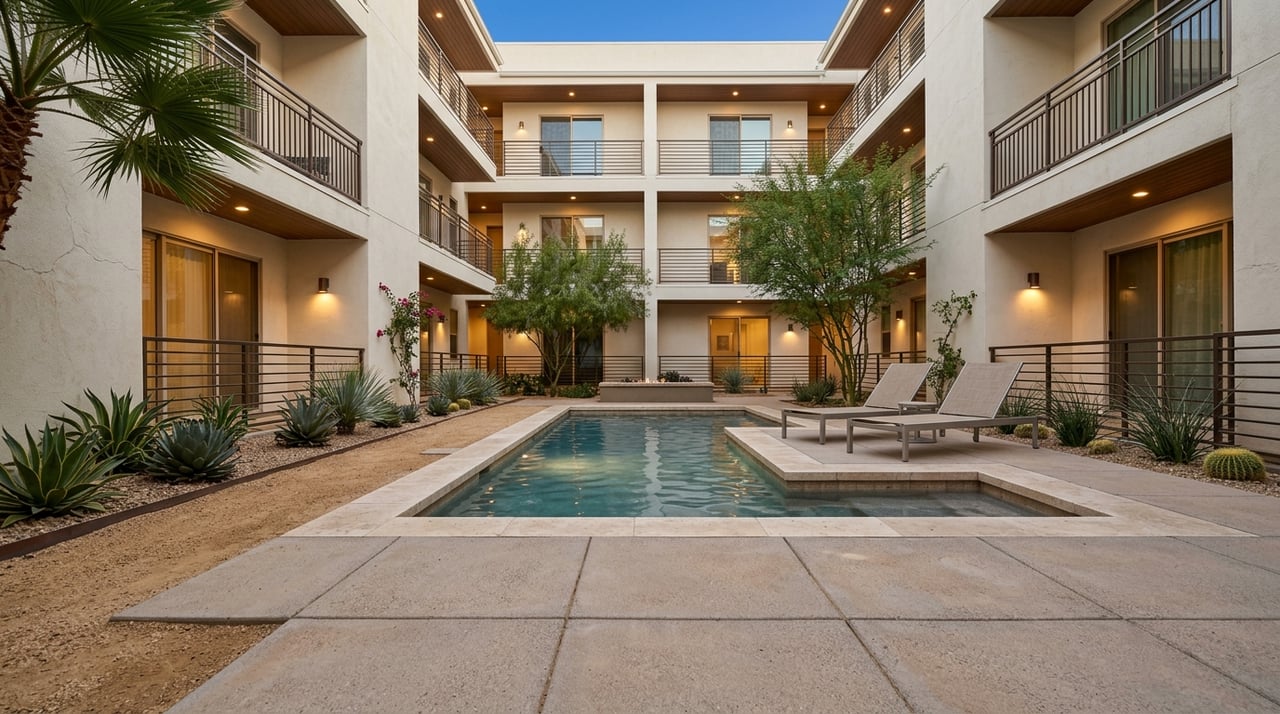
Tempe condo living can look like the perfect middle ground: lower maintenance than a house, easier access to the city, and a price point that may feel more attainable. If you are weighing whether condo ownership in Tempe really fits your lifestyle and budget, it helps to look past the listing photos and into the details that shape daily life. From HOA rules to parking, financing, and insurance, knowing what to review before you commit can help you buy with more confidence. Let’s dive in.
Tempe offers a distinctly urban feel compared with many other parts of the East Valley. According to city sources, Downtown Tempe and Tempe Town Lake bring together housing, jobs, dining, shopping, arts, and events in one active core, with Mill Avenue anchored by Arizona State University on one side and Tempe Town Lake on the other.
That level of activity matters when you are choosing a condo. Tempe Town Lake draws more than 2.4 million visitors each year and hosts more than 40 special events annually, which speaks to how much is happening nearby if you want to live close to the center of it all.
Transit is another big reason buyers consider condos here. The City of Tempe says the city has 13 bus routes, two express routes, one free Flash route, six free Orbit circulators, light rail with nine Tempe stops, and the 3.1-mile Tempe Streetcar with 14 stops and daily service every 15 to 20 minutes.
If you want a home that supports a more mobile, lower-maintenance lifestyle, that network can be a major advantage. In Tempe, condo living often appeals to buyers who value convenience, access, and being near the urban core more than having a large lot or private outdoor space.
Buying a condo is not exactly the same as buying a detached home. You are purchasing your unit, but you are also buying into a shared ownership structure with rules, budgets, common areas, and an owners association that helps govern the property.
That governance piece is important in Arizona. State law requires a resale package that includes documents such as the declaration, bylaws, rules, current operating budget, most recent annual financial report, reserve study if there is one, unpaid assessments, insurance information, pending litigation, and a signed acknowledgment that those documents form a contract and that unpaid assessments can lead to foreclosure.
Arizona law also gives condo associations broad authority to adopt and amend rules, budget for revenues and reserves, collect assessments, regulate common elements, add improvements, charge for use of common elements, and impose late fees or monetary penalties after notice and an opportunity to be heard. In plain terms, that means the HOA is not a side detail. It is a core part of what you are buying.
The resale disclosure process can also carry a cost. Under Arizona law, associations may charge up to $400 for resale disclosure and related transfer services, with limited rush and update fees allowed in some cases.
When you buy a Tempe condo, the HOA documents can tell you as much as the unit itself. A beautiful interior may catch your eye, but the budget, reserve funding, insurance structure, meeting history, and pending litigation can affect your ownership experience long after closing.
Arizona law gives members access to many records and requires open meetings in many situations. That creates a practical opportunity for you to look beyond marketing language and understand how the association actually operates.
A strong review should help you answer questions like these:
These details shape both your monthly costs and your long-term risk. They can also affect resale value and financing options later.
Association dues are not optional once you own the property. Arizona law says a common-expense lien can be foreclosed in the same manner as a mortgage if an owner is delinquent for one year or owes $1,200 or more, whichever comes first.
The law also requires the association to make reasonable efforts to communicate and offer a payment plan before filing foreclosure. Even so, this is a serious part of condo ownership, and it is one more reason to make sure the total monthly cost works comfortably within your budget before you buy.
In Tempe, parking is one of the easiest things to assume and one of the most important things to verify. What is available can vary widely by building, unit, and neighborhood.
Downtown Tempe reports more than 20,000 paid public parking spaces, more than 550 on-street spaces, and monthly parking options. The City of Tempe also notes that some residential areas require parking permits. That sounds encouraging at a district level, but it does not mean your condo automatically comes with convenient or secure parking.
Before you commit, confirm exactly how parking works for the unit you are considering. Ask whether the space is:
It is also smart to ask about guest parking rules, overflow parking, and whether the HOA can change parking assignments or usage policies. If you expect to have more than one vehicle, make sure the building truly supports that need.
Many buyers group condos together as if they all offer the same lifestyle, but in reality, amenity packages can differ a lot from one Tempe building to the next. One property may include a pool, elevator, garage, and controlled access, while another may offer only basic shared spaces.
Arizona law allows associations to regulate common elements, add improvements, and charge for use of common elements. That means amenities are shaped by each association’s governing documents, budget, and priorities.
If a feature matters to you, do not assume it is included just because a condo is in a certain part of Tempe. Verify what exists now, what is maintained by the HOA, whether there are extra usage fees, and whether there have been recent discussions about repairs or changes.
Many buyers focus on credit score, down payment, and income when they think about mortgage approval. With condos, the project itself can matter too.
Fannie Mae and Freddie Mac both indicate that condo lending may depend on project review, occupancy, reserves, reserve studies, and overall project status. In other words, even if you are a strong borrower, the building or association may still affect whether your preferred loan program works.
This is why early due diligence matters. If you already know your intended loan type, it is worth confirming as soon as possible whether the condo project is likely to meet those standards.
Insurance is another area where condo buyers can get tripped up if they assume the HOA covers everything. In most cases, it does not.
Condo ownership usually involves two layers of coverage. The association’s master policy generally covers common areas, while your own condo policy covers your personal property and your interior interests in the unit.
Before closing, ask for clear information on what the master policy covers and where your responsibility begins. That can help you avoid gaps in coverage and budget more accurately for your total monthly ownership costs.
The biggest difference between a condo and a single-family home often comes down to tradeoffs. Condos typically offer lower maintenance and shared amenities, but they also involve HOA oversight and less private control.
In Tempe, that tradeoff can make a lot of sense if you want easy access to Downtown Tempe, Tempe Town Lake, ASU, transit, dining, and events. If you prefer more space, more autonomy, or a private yard, a detached home may feel like a better fit.
Neither option is automatically better. The right choice depends on how you want to live day to day and what responsibilities you are comfortable sharing.
If you are comparing cities, price is a meaningful part of the conversation. Redfin’s March 2026 data shows a median sale price of $480,000 in Tempe overall, with single-family homes at $560,000 and condos and co-ops at $294,000. Chandler’s median sale price was $531,000, while Scottsdale’s was $965,000.
These comparisons are broad and not perfectly apples-to-apples, but they help show the pattern. A Tempe condo is often one of the lower-entry options among these nearby markets, especially if you want to stay close to an active urban center.
Lifestyle differences matter too. Tempe stands out for its mix of light rail, streetcar, buses, Orbit, and Flash service. Chandler offers fixed-route buses, Chandler Flex, express service, and a park-and-ride connection to Mesa light rail. Scottsdale has three free trolley routes and connections to regional bus service, but its network is more corridor-based and less rail-oriented than Tempe’s.
That means your decision is not just about price or square footage. It is also about whether you want a more urban, transit-connected setup or a more suburban and car-dependent pattern of living.
Before you move forward on a Tempe condo, make sure you can clearly answer these questions:
The goal is not to make condo buying feel complicated. It is to help you avoid surprises and choose a property that fits both your lifestyle and your long-term plans.
If you are considering a condo in Tempe, a careful review can protect more than your monthly budget. It can help you choose a home that supports the way you want to live now and preserves flexibility for the future. When you want a thoughtful, data-informed approach to buying in the Valley, Timeless is here to help you move forward with clarity.
Real estate is more than a purchase— it’s a foundation for your future. Buy, sell, and invest with purpose, building generational wealth that endures. The choices you make today shape a legacy that stands the test of time.
7633 E ACOMA DR UNIT 208B SCOTTSDALE AZ 85260